
Four Department of Medicine faculty are among the five recipients of the Beckwith Institute’s 2026–27 Clinical Transformation Program awards, supporting research aimed at developing new approaches to diagnosis, monitoring, and treatment across a range of complex conditions.
The Clinical Transformation Program supports promising, research-based projects designed to test innovative approaches to patient care. Many projects begin as early-stage pilot efforts, with the potential to generate evidence that can support broader implementation and future external funding.
The Department of Medicine awardees and their projects are:
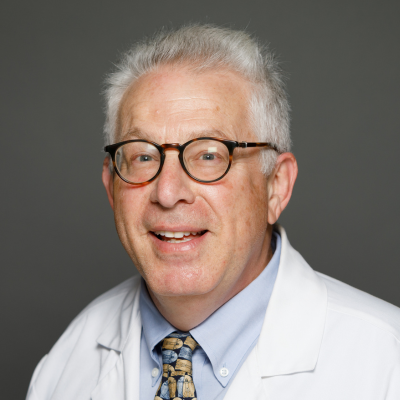
Bruce L. Rollman, MD, MPH, MBA
A Digital-First Strategy to Provide Evidence-Based Integrated Behavioral Health Treatments in Routine Primary Care
Depression and anxiety are among the most common conditions encountered in primary care, yet many patients do not receive evidence-based behavioral health treatment. Bruce L. Rollman, MD, MPH, MBA, will examine how digital therapeutics can be integrated into routine primary care to expand access to treatment.
The project will incorporate depression and anxiety screening into existing primary care workflows, focusing on patients with high-cost chronic conditions and those recently discharged from a hospital or emergency department. The study also will evaluate clinical, operational, and financial outcomes to inform potential broader use of digital behavioral health services across the UPMC primary care network.

Rachael Gordon, MD, PhD
Beyond the Slit Lamp: Portable Ocular Imaging to Bridge the Diagnostic Gap in Sjögren’s Disease
Sjögren’s disease can take years to diagnose, in part because an important component of the diagnostic evaluation requires specialized ophthalmic equipment and expertise that may not be available during a rheumatology visit.
Rachael Gordon, MD, PhD, will evaluate whether low-cost, portable ocular imaging can enable rheumatologists to perform objective eye assessments in their own clinics. Researchers will compare images from the portable device with conventional slit-lamp examinations and develop a semiautomated approach to image analysis. If successful, the approach could facilitate earlier diagnosis and improve collaboration between rheumatology and ophthalmology.

Anita Saraf, MD, PhD
Metabolic Dysfunction Drives Exercise Intolerance in Fontan Patients
Many adults who underwent the Fontan procedure for single-ventricle heart disease develop progressive heart and liver disease accompanied by debilitating exercise intolerance. Anita Saraf, MD, PhD, will investigate whether liver dysfunction contributes to declining cardiac performance and reduced exercise capacity in these patients.
The study will combine cardiopulmonary exercise testing with metabolic analysis to examine how participants use fatty acids, ketones, glucose, and lactate before, during, and after exercise. The researchers hope to identify metabolic changes that could serve as early indicators of disease progression before conventional imaging detects cardiac dysfunction.

Mark E. Snyder, MD
Utilization of a Novel Epigenetic Liquid Biopsy to Noninvasively Identify Acute Cellular Rejection After Lung Transplantation
Acute cellular rejection is a significant complication following lung transplantation and can contribute to chronic lung allograft dysfunction. Current monitoring often relies on repeated bronchoscopies and lung biopsies, or on changes in lung function that may occur after significant injury has developed.
Mark E. Snyder, MD, will evaluate a novel blood-based liquid biopsy designed to detect acute cellular rejection and identify patients at risk for chronic lung allograft dysfunction. The study will analyze DNA methylation patterns and other molecular signals in circulating cell-free DNA to determine whether rejection can be detected before conventional testing identifies substantial loss of lung function. If successful, the approach could offer a less invasive way to monitor lung transplant recipients and enable earlier treatment.